Breaking

Showing posts with label News. Show all posts

Tuesday, March 06, 2018

What is 5G? Everything you need to know

null

What is 5G?

5G networks are the next generation of mobile internet connectivity, offering faster speeds and more reliable connections on smartphones and other devices than ever before.
Combining cutting-edge network technology and the very latest research, 5G should offer connections that are multitudes faster than current connections, with average download speeds of around 1GBps expected to soon be the norm.
The networks will help power a huge rise in the Internet of Things technology, providing the infrastructure needed to carry huge amounts of data, allowing for a smarter and more connected world.
With development well underway, 5G networks are expected to launch across the world by 2020, working alongside existing 3G and 4G technology to provide speedier connections that stay online no matter where you are.
WHEN WILL 5G LAUNCH?

- 5G technology is expected to officially launch across the world by 2020
- The US, China and South Korea are expected to be some of the first nations to install full 5G networks, with others including the UK not far behind
- Many companies are busy making sure their networks and devices are '5G ready' in time for 2020, meaning some networks may launch before then


What will 5G networks mean for me?

  • Faster download and upload speeds
  • Smoother streaming of online content 
  • Higher-quality voice and video calls 
  • More reliable mobile connections
  • The greater number of connected IoT devices 
  • An expansion of advanced technologies - including self-driving cars and smart cities

How fast will 5G be?

It’s still not exactly known how much faster 5G will be than 4G, as much of the technology is still under development.
That being said, the networks should provide a significant upgrade to current download and upload speeds - with the GSMA proposing minimum download speeds of around 1GBps.
Most estimates expect the average speed of 5G networks to reach 10Gb/s, and some even think transfer rates could reach a whopping 800Gb/s.
This would mean that users could download a full-length HD quality film in a matter of seconds and that downloading and installing software upgrades would be completed much faster than today.

Will I be able to get 5G networks on my phone?

Existing smartphones, tablet or other devices that were released when 4G networks were the standard may not be able to connect to 5G, to begin with or may incur extra costs to do so. 
However, following the 2020 deadline for the initial rollout, we should soon see devices coming with the 5G connection as default.
Don't worry though - although 5G should represent a major step up from current 4G and 3G networks, the new technology won’t immediately replace its predecessor - at least, not to begin with.
Instead, 5G should link in with existing networks to ensure users never lose connection, with the older networks acting as a back-up in areas not covered by the new 5G coverage.
So-called “4.5G” networks (also known as LTE-A) are set to fill the gap, for the time being, offering connections that are faster than current 4G networks, although only certain countries such as South Korea can benefit from them right now.
Once launched, however, implementing 5G may be a slower process. Much like the gradual takeover of 4G networks from the previous generation, existing network infrastructure may need to be upgraded or even replaced in order to deal with the new technology, and homes and businesses may also need to get new services installed.
It’s not yet known how 5G networks will take over from existing networks, but again, much like the rollout of 4G, you may not be able to immediately connect to the new networks without upgrading your technology.

What will a 5G network need?

The GSMA has outlined eight criteria for 5G networks, with a connection needing meet a majority of these in order to qualify as 5G:
  • 1-10Gbps connections to endpoints in the field (i.e. not theoretical maximum)
  • 1 millisecond end-to-end round trip delay (latency) 
  • 1000x bandwidth per unit area
  • 10-100x number of connected devices 
  • (Perception of) 99.999 percent availability 
  • (Perception of) 100 percent coverage
  • 90 percent reduction in network energy usage 
  • Up to 10-year battery life for low power, machine-type devices 
Sunday, March 04, 2018

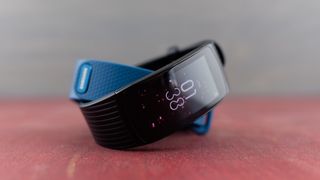
Samsung Gear Fit 3: what we want to see

null
The Samsung Gear Fit 3 could be one of the best fitness trackers of 2018 – if it launches in 2018. The truth is that we don’t know anything about it yet, but based on the strength of its predecessors were somewhat excited by the prospect of it.
The Samsung Gear Fit 2 Pro is currently sitting at number two in our best fitness trackers list, and that’s despite it being a conservative upgrade on the Gear Fit 2– if the Gear Fit 3 is an upgrade worthy of a new number then it could be very impressive indeed.
We’ll add all the news and rumors to this article as we hear them, but in the meantime, you’ll find a wish list of what we want from the wearable, along with some educated guesses as to what it might feature and when it might launch.

Cut to the chase

  • What is it? Samsung's next fitness tracker
  • When is it out? Possibly late 2018
  • What will it cost? Likely upwards of $199 / £209 (around AU$370)

Samsung Gear Fit 3 release date and price

There isn’t any release date news about the Samsung Gear Fit 3 yet, but there’s a chance the wearable will follow the lead of the Gear Fit 2 Pro, which was unveiled on August 30, 2017, at IFA 2017, before hitting stores in October 2017.
So we might see the Gear Fit 3 at IFA 2018, which takes place August 31 – September 5. Though the Gear Fit 2 was announced in June 2016 and not at IFA, so there’s no guarantee of that.
As for the price, all we can do there is look at the current model too. The Gear Fit 2 Pro launched for $199 / £209 (about AU$370), so there’s a chance the Gear Fit 3 will have a similar price.
So far we don't know anything about the follow-up to the Gear Fit 2 Pro

Samsung Gear Fit 3 news and rumors

So far there aren’t any Samsung Gear Fit 3 rumors, but we’d be surprised if the company wasn’t working on it and we’ll keep this page updated with all the news as we hear it.
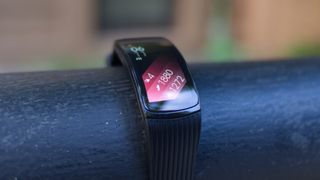
In the meantime, we can speculate on a few things. For example, the Samsung Gear Fit 3 will probably have many of the same features as the Gear Fit 2 Pro, including a heart rate monitor, GPS and water resistance, along with a color screen.

What we want to see

While we have no news about the Gear Fit 3 as yet, there are plenty of things we want from it, such as the following.

1. A simple setup

Setting up the Samsung Gear Fit 2 Pro is a clunky experience, thanks primarily to the need to download multiple apps onto your phone just to get the most out of it.
So for the Gear Fit 3 we’d like to see a simpler, more streamlined setup process that allows you to get properly up and running (literally) in a matter of minutes.

2. Better battery life

With limited usage, you’ll get two to three days of life out of the Gear Fit 2 Pro and just one day with heavy use, which isn’t awful but certainly isn’t great.
While we’re used to charging our smartwatches daily, fitness trackers often manage to last a little longer, so we’d like to see an extra day or so added to the life of the Gear Fit 3.

3. A reliable barometer

The Samsung Gear Fit 2's barometer wasn't always accurate
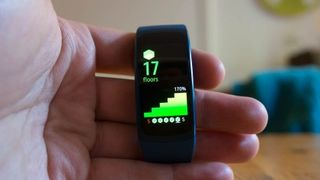
One issue we noted with the Gear Fit 2 was that water could mess with the barometer, causing it to think you’ve walked up many more flights of stairs than you actually have.
We’re not expecting this to be an issue with the Samsung Gear Fit 3 but we’ll certainly be disappointed if it is.

4. A reasonable price

While the Gear Fit 2 Pro isn’t wallet-weepingly expensive it did launch at a higher price than the Gear Fit 2, and that’s despite only being slightly improved and landing over a year later, so there’s a worry that the Gear Fit 3 could be a pricey wearable, but we hope Samsung keeps the price competitive.

5. Spotify pre-installed

It’s a small point, but despite Spotify (and specifically its offline mode) being one of the best features of the Gear Fit 2 Pro, it didn’t come pre-installed, even though a bunch of apps did, so we’d like to see the music streamer ready to go out of the box for the Gear Fit 3.

6. A refreshed design

The Samsung Gear Fit 3 could do with a design refresh
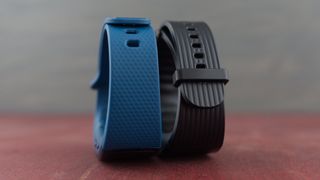
The Gear Fit 2 Pro has a fairly nice design, but it’s also pretty much exactly the same as the design of the Gear Fit 2, so we’d like to see Samsung freshen things up a bit for the Gear Fit 3, or even just give buyers a greater selection of colors to choose from.

7. A significant upgrade

The Gear Fit 2 Pro is an accomplished fitness tracker, but it’s only a small upgrade on the Gear Fit 2, so for Samsung to stay relevant and excite us we want some big upgrades from the Gear Fit 3.
That could take the form of new sensors, more metrics, greater accuracy, improved smartwatch features or any number of other things, but we hope Samsung does something to make it stand out.

AMD’s Ryzen 7 2700X spec leaked showing CPU boosts to 4.2GHz

AMD Ryzen
If you’re excited about AMD’s incoming Ryzen 2nd Generation processors, then you will doubtless be interested to hear that a leak has spilled online showing the purported specs of the Ryzen 7 2700X.
This high-end model is an 8-core CPU (with 16-threads), and according to the leak which comes from the 3DMark (benchmarking) database, the Ryzen 7 2700X will have a base clock of 3.7GHz with a boost to 4.1GHz.
As Wccftech.com reports, though, it could boost up to 4.2GHz with XFR 2.0 (XFR tech further boosts the turbo of the CPU a little more, as long as the cooling solution employed can handle that extra pep).
So how does that compare to the current Ryzen 7 1700X? That chip has a base clock of 3.4GHz – so the 2700X is 300MHz faster – and it boosts to 3.8GHz.
The leak also shows that the 2700X runs with 16MB of L3 cache and 4MB of L2 cache, and a TDP of 95W.

It ain’t all about clocks

Bear in mind that clock speed increases aren’t the only benefit of Ryzen 2nd Generation CPUs compared to the original range. You’ll also be getting the improvements of honed chip architecture and better cache latencies, which when combined with the improved clock speeds, should represent a nice step up in performance.
Furthermore, Precision Boost 2.0 technology should help these processors to intelligently and more consistently get the most out of boost speeds (with lighter apps/games and cooler-running CPUs getting the most benefit therein).
We won’t have long to wait for the proof of the pudding at any rate, as Ryzen 2nd Generation chips will be baked and set to launch come next month, and naturally, we’ll be standing by to fully put them through their paces.

Saturday, March 03, 2018

Instagram’s code reveals potential voice and video calling features

The files found are labeled ‘call’ and ‘video call’ with phone and camera icons

Photo by James Bareham / The Verge
Analysis of Instagram’s code has revealed several files that point to possible upcoming voice and video calling features, reports TechCrunch. The files are labeled “call” and “video call” with phone and camera icons that are present in the app’s Android application packages (APKs). APKs contain all of that app’s code and can show files for unreleased functions that are already present in the app but not yet launched.
If the features do go live, it would make Instagram an even bigger threat to Snapchat. Snapchat also has video calling, but it’s somewhat buried; you have to tap on a friend’s profile and select the call button in their specific chat screen. (Messenger, on the other hand, has a dedicated call button on the app’s launch screen.) Snapchat’s recent redesign has also been met with confusion and anger, so if Instagram can make the calling option straightforward, it just adds another reason for users to stay within the Instagram app.
The call icons found in Instagram’s APK.
 Image: Ishan Agarwal via TechCrunch
Instagram is known to poach features from Snapchat like ephemeral videos and photos. (Instagram Stories already has more users than Snapchat.) Snapchat’s calling feature allows you to use AR Lenses, which overlay your face with things like dog ears or flower crowns. Instagram already has its own lenses for selfies, so it might be logical to expect lenses overlaid on video calls to be a feature on Instagram video calls, too.
There’s no indication yet if and when voice and video calling might launch.

Google expands featured snippets to give multiple results


Image result for Google  featured snippets to give multiple results


This week, Google is expanding its “featured snippets,” the portion of text that is returned above a search result to give you quick answers without having to click through, as reported by TechCrunch.
In a blog post, Google explains it is adjusting this function because the questions we ask can be multifaceted and mean different things. For example, the terse, sample query “garden needs full sun?” could mean “what garden plants need full sun?” or “what counts as the full sun?” Another example Google gives is “tooth pain after filling,” which could be understood as “why does my tooth still hurt after a filling?” or “how long should a tooth hurt after a filling?” Where before Google would previously only return one featured snippet (which hopefully addressed the question), it will now return multiple featured snippets that address different interpretations.
Google featured snippetsImage: Google
Google is starting with “multi-intent” queries, but in the future, plans to include what it calls “guidance-seeking” queries, or questions that have many facets bundled into one. An example would be, “is it worth fixing my foundation?” — a broad question that involves cost, methods, and more.
The company announced it was working on delivering multiple snippets earlier this year. The feature has had its share of controversy in the past — Google often finds itself under fire delivering inaccurate and offensive snippets for certain search terms as a result of the PageRank algorithm, which was built to deliver the most popular results for any search regardless of accuracy or truthfulness.

Now you can Chromecast your Arlo camera feeds with Google Assistant


Netgear’s Arlo line of wire-free security cameras aren’t exactly the cheapest cameras on the market, but they’re super popular, cute to look at, filled with features, and now they’re getting Google Assistant support.
Once you add your Arlo cameras to the Google Home app (most of the Arlo line is supported), you can ask Google Assistant to pull up any of those camera feeds. You can stream the video to Google Assistant on iOS and Android, but the real fun is in the Chromecast integration. It works a little something like this:
”Ok Google, show Front Door on Living Room TV”
Other security cameras, including Logitech’s Circle and Nest Cam IQ, already have shipped with Google Assistant, too. With Nest Cam IQ you can actually use the camera’s built-in microphone and speaker as a limited Google Home, but Netgear hasn’t gone quite that far with its Arlo integration.
It’s also important to note that most Arlo cameras already work with any Alexa device that has a screen, such as a Fire TV, Fire Tablet, or Echo Show, and at least the Arlo Baby Smart HD works with Apple’s HomeKit for Apple TV support.
Voice assistants have always shined in two areas: setting timers, and controlling smart homes. It’s nice to see that Google Assistant and Alexa integration are becoming default features for these tiny smart cameras we’ve scattered around our homes.

The best and worst of Mobile World Congress 2018

Image result for Mobile World Congress 2018:
Mobile World Congress 2018: what happened? Maybe it’s best to start with what didn’t happen: Huawei didn’t have a new flagship phone, LG rebadged its old flagship phone, and Motorola and HTC had no phones to show at all. The traditional deluge of new super-specced phones just wasn’t here as it usually is.
But that didn’t leave us with a boring show — far from it. Nokia reached back into the archives to revive another classic, Google’s hardware partners presented their first Android Go devices, and the pervasive buzzwords of 5G and AI were everywhere. There were even some cool laptops to look at. Here are the highlights, followed by the unfortunate lowlights.

THE BEST

THE DEMISE OF SCREEN BEZELS

Nokia 8 Sirocco.
 Photo by Tom Warren / The Verge
Whether companies call them full-screen, all-screen, FullVision, or Infinity Displays, there’s no mistaking the fact that a modern phone in 2018 is most readily recognized by the scarcity of its bezels around the screen. This is an awesome thing, allowing companies like Asus to give us 6.2-inch flagship phones within a smaller physical footprint than their previous 5.5-inch devices. Such has been the transformation between last year’s Zenfone 4 and this year’s Zenfone 5. As to the wider mobile industry, we’ve gone from Samsung and LG being the exception with their vanishingly thin bezels in 2017 to now being the norm.

SAMSUNG’S GALAXY S9 AND S9 PLUS

Samsung Galaxy S9 Plus and S9.
 Photo by James Bareham / The Verge
You may have been disappointed by the incremental nature of Samsung’s upgrades this year, but it’s hard to argue that there was any better phone at MWC than Samsung’s new flagship duo. With a new dual-aperture camera, a fingerprint reader now sanely position in the middle of the back, and the best and latest processors, the Galaxy S9 is a formidable giant that will tower over the Android phone industry for at least the rest of this year. Its similarities to the existing Galaxy S8 are a strength rather than a hindrance: that phone was one of the best-designed handsets last year and remains a class-leading device today.

NOKIA’S 8110 MATRIX PHONE

Nokia 8110.
 Photo by Tom Warren / The Verge
Yes, we are all suckers for gadgets that stir up feelings of nostalgia for our lost (or dwindling) youth. HMD Global, the company exploiting the Nokia brand, has shown itself an expert in refining and updating classic models from the Nokia archive for the modern world. Pricing the 8110 at less than $100, the company gives you a surprising amount of advanced functionality to go with the familiar slider styling. This phone has LTE, Google Assistant and Google Maps, Twitter and Facebook apps, Snake (because it has to), and a promised standby time of 25 days.

LENOVO’S AWESOME LITTLE CHROMEBOOKS

Lenovo 500e Chromebook.
 Photo by Vlad Savov / The Verge
The not traditional fare for a phone show, but Lenovo’s Chromebooks for schools left a positive impression here at MWC. Each of them has been ruggedized to withstand drops and spills, and the note-taking capabilities of the two higher-end models are great. One allows you to take notes with a regular pencil directly on the screen, while the other has a lag-free stylus input that’s delightful to use. The most expensive among them is a super affordable $349, which is roughly what netbooks used to cost, and there’s more than a passing similarity between these ultra-basic Lenovo Chromebooks and the classic Eee PCs from years ago.

VIVO’S APEX CONCEPT PHONE

Vivo Apex concept phone.
 Photo by Sam Byford / The Verge
Vivo grabbed a lot of attention at CES 2018 by being the first company with a fingerprint reader integrated directly into the display, and it followed that up with a concept phone at MWC that was even more aggressively futuristic. The Apex concept device strips the bezels back even further than we’re now getting used to, and it achieves that by vibrating the screen so as to produce sound without an earpiece. Vivo also shifts the selfie camera to a pop-up module that extends from the top of the phone like a periscope. The Vivo Apex provided a fun exhibit of the current thinking and deliberation among phone designers looking for the next breakthrough.

THE WORST

THE RISE OF IPHONE X COPYCAT NOTCHES

iPhone X and Zenfone 5.
 Photo by Vjeran Pavic / The Verge
The flip side of the new, slimmed-down display bezels is that they allow companies to do weird things with the particular layout and design of their screens. And many, far too many, at MWC 2018 have chosen to simply copy the look of the notch in Apple’s iPhone X. It’s a cynical move, which Asus is especially guilty of and unapologetic about. No one is even attempting to emulate Apple’s Face ID, which is the main reason for the iPhone’s notch; companies are just aping the Apple aesthetic with their own cosmetic alterations. The Asus Zenfone 5 thus represents both sides of the new phone screen trends: the good of slimming bezels and the bad of a deliberately derivative design.

THE HEADPHONE JACK IS BECOMING A RARITY

Sony Xperia XZ2.
 Photo by Chris Welch / The Verge
You know those big old ports on the back of desktop computers that companies still keep supporting many years after no one even remembers what they were for? That’s how the mobile industry perceives the headphone jack nowadays. It’s treated as legacy hardware. As such, the 3.5mm audio jack continues to be available on budget phone models (along with the awful Micro USB connector) and from some companies unwilling to follow the mainstream trend, such as Samsung and LG. This year, Nokia and Sony both introduced new flagships without a headphone jack, with their hope being that superior Bluetooth audio codecs will cover for the loss of the convenient, simple, and once-upon-a-time universal 3.5mm wire.

SAMSUNG’S AR EMOJI

AR emoji galaxy s9
Samsung AR Emoji.
 Photo by Sam Byford / The Verge
They are dreadful, aren’t they? In its effort to keep pace with Apple’s iPhone and iOS, Samsung this week introduced its answer to Animoji in the form of its own AR Emoji. Technically speaking, these are rather impressive facial scans, given that the Galaxy S9 only uses the front-facing camera and no additional specialized equipment to produce them. But in practice, you get some rather weird, misshapen creations, whose facial animations are worse than anything we’ve seen since Mass Effect: Andromeda came out.

LG’S CYNICAL V30 REBADGE

LG V30S next to LG V30.
 Photo by Vlad Savov / The Verge
There are many industries in which a company will take an existing product, make a couple of cosmetic tweaks, and then reissue it under a new brand name. With phones, however, the rate of technological change and progress has always been so fast as to make that unnecessary. In 2018, LG has shown that the mobile industry is starting to fall in line with others by reissuing the LG V30 under a new product title of LG V30S ThinQ. The new V30 is identical to the old one, save for the addition of some extra RAM and storage. Everything novel about the V30S, of which there isn’t much, will be back-ported to the V30 in a software update. So LG simply used MWC 2018 as a launch platform for a software patch. Underwhelming to an extreme.

Comments system

Disqus Shortname

Comments System

Disqus Shortname

Disqus Shortname

theme-daddy

Comments System

[blogger][disqus][facebook]
Powered by Blogger.