Breaking

Showing posts with label Android. Show all posts

Sunday, March 04, 2018

Samsung Gear Fit 3: what we want to see

null
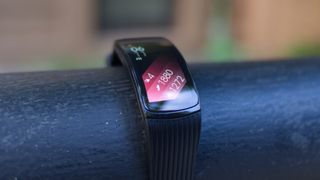
The Samsung Gear Fit 3 could be one of the best fitness trackers of 2018 – if it launches in 2018. The truth is that we don’t know anything about it yet, but based on the strength of its predecessors were somewhat excited by the prospect of it.
The Samsung Gear Fit 2 Pro is currently sitting at number two in our best fitness trackers list, and that’s despite it being a conservative upgrade on the Gear Fit 2– if the Gear Fit 3 is an upgrade worthy of a new number then it could be very impressive indeed.
We’ll add all the news and rumors to this article as we hear them, but in the meantime, you’ll find a wish list of what we want from the wearable, along with some educated guesses as to what it might feature and when it might launch.

Cut to the chase

  • What is it? Samsung's next fitness tracker
  • When is it out? Possibly late 2018
  • What will it cost? Likely upwards of $199 / £209 (around AU$370)

Samsung Gear Fit 3 release date and price

There isn’t any release date news about the Samsung Gear Fit 3 yet, but there’s a chance the wearable will follow the lead of the Gear Fit 2 Pro, which was unveiled on August 30, 2017, at IFA 2017, before hitting stores in October 2017.
So we might see the Gear Fit 3 at IFA 2018, which takes place August 31 – September 5. Though the Gear Fit 2 was announced in June 2016 and not at IFA, so there’s no guarantee of that.
As for the price, all we can do there is look at the current model too. The Gear Fit 2 Pro launched for $199 / £209 (about AU$370), so there’s a chance the Gear Fit 3 will have a similar price.
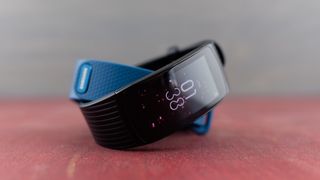
So far we don't know anything about the follow-up to the Gear Fit 2 Pro

Samsung Gear Fit 3 news and rumors

So far there aren’t any Samsung Gear Fit 3 rumors, but we’d be surprised if the company wasn’t working on it and we’ll keep this page updated with all the news as we hear it.
In the meantime, we can speculate on a few things. For example, the Samsung Gear Fit 3 will probably have many of the same features as the Gear Fit 2 Pro, including a heart rate monitor, GPS and water resistance, along with a color screen.

What we want to see

While we have no news about the Gear Fit 3 as yet, there are plenty of things we want from it, such as the following.

1. A simple setup

Setting up the Samsung Gear Fit 2 Pro is a clunky experience, thanks primarily to the need to download multiple apps onto your phone just to get the most out of it.
So for the Gear Fit 3 we’d like to see a simpler, more streamlined setup process that allows you to get properly up and running (literally) in a matter of minutes.

2. Better battery life

With limited usage, you’ll get two to three days of life out of the Gear Fit 2 Pro and just one day with heavy use, which isn’t awful but certainly isn’t great.
While we’re used to charging our smartwatches daily, fitness trackers often manage to last a little longer, so we’d like to see an extra day or so added to the life of the Gear Fit 3.

3. A reliable barometer
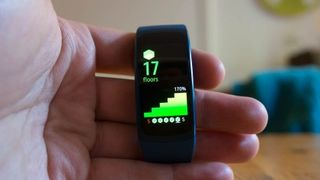
The Samsung Gear Fit 2's barometer wasn't always accurate
One issue we noted with the Gear Fit 2 was that water could mess with the barometer, causing it to think you’ve walked up many more flights of stairs than you actually have.
We’re not expecting this to be an issue with the Samsung Gear Fit 3 but we’ll certainly be disappointed if it is.

4. A reasonable price

While the Gear Fit 2 Pro isn’t wallet-weepingly expensive it did launch at a higher price than the Gear Fit 2, and that’s despite only being slightly improved and landing over a year later, so there’s a worry that the Gear Fit 3 could be a pricey wearable, but we hope Samsung keeps the price competitive.

5. Spotify pre-installed

It’s a small point, but despite Spotify (and specifically its offline mode) being one of the best features of the Gear Fit 2 Pro, it didn’t come pre-installed, even though a bunch of apps did, so we’d like to see the music streamer ready to go out of the box for the Gear Fit 3.

6. A refreshed design
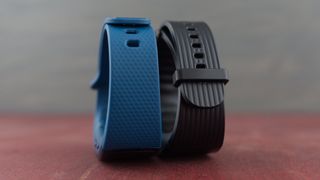
The Samsung Gear Fit 3 could do with a design refresh
The Gear Fit 2 Pro has a fairly nice design, but it’s also pretty much exactly the same as the design of the Gear Fit 2, so we’d like to see Samsung freshen things up a bit for the Gear Fit 3, or even just give buyers a greater selection of colors to choose from.

7. A significant upgrade

The Gear Fit 2 Pro is an accomplished fitness tracker, but it’s only a small upgrade on the Gear Fit 2, so for Samsung to stay relevant and excite us we want some big upgrades from the Gear Fit 3.
That could take the form of new sensors, more metrics, greater accuracy, improved smartwatch features or any number of other things, but we hope Samsung does something to make it stand out.

Saturday, March 03, 2018

The best and worst of Mobile World Congress 2018

Image result for Mobile World Congress 2018:
Mobile World Congress 2018: what happened? Maybe it’s best to start with what didn’t happen: Huawei didn’t have a new flagship phone, LG rebadged its old flagship phone, and Motorola and HTC had no phones to show at all. The traditional deluge of new super-specced phones just wasn’t here as it usually is.
But that didn’t leave us with a boring show — far from it. Nokia reached back into the archives to revive another classic, Google’s hardware partners presented their first Android Go devices, and the pervasive buzzwords of 5G and AI were everywhere. There were even some cool laptops to look at. Here are the highlights, followed by the unfortunate lowlights.

THE BEST

THE DEMISE OF SCREEN BEZELS

Nokia 8 Sirocco.
 Photo by Tom Warren / The Verge
Whether companies call them full-screen, all-screen, FullVision, or Infinity Displays, there’s no mistaking the fact that a modern phone in 2018 is most readily recognized by the scarcity of its bezels around the screen. This is an awesome thing, allowing companies like Asus to give us 6.2-inch flagship phones within a smaller physical footprint than their previous 5.5-inch devices. Such has been the transformation between last year’s Zenfone 4 and this year’s Zenfone 5. As to the wider mobile industry, we’ve gone from Samsung and LG being the exception with their vanishingly thin bezels in 2017 to now being the norm.

SAMSUNG’S GALAXY S9 AND S9 PLUS

Samsung Galaxy S9 Plus and S9.
 Photo by James Bareham / The Verge
You may have been disappointed by the incremental nature of Samsung’s upgrades this year, but it’s hard to argue that there was any better phone at MWC than Samsung’s new flagship duo. With a new dual-aperture camera, a fingerprint reader now sanely position in the middle of the back, and the best and latest processors, the Galaxy S9 is a formidable giant that will tower over the Android phone industry for at least the rest of this year. Its similarities to the existing Galaxy S8 are a strength rather than a hindrance: that phone was one of the best-designed handsets last year and remains a class-leading device today.

NOKIA’S 8110 MATRIX PHONE

Nokia 8110.
 Photo by Tom Warren / The Verge
Yes, we are all suckers for gadgets that stir up feelings of nostalgia for our lost (or dwindling) youth. HMD Global, the company exploiting the Nokia brand, has shown itself an expert in refining and updating classic models from the Nokia archive for the modern world. Pricing the 8110 at less than $100, the company gives you a surprising amount of advanced functionality to go with the familiar slider styling. This phone has LTE, Google Assistant and Google Maps, Twitter and Facebook apps, Snake (because it has to), and a promised standby time of 25 days.

LENOVO’S AWESOME LITTLE CHROMEBOOKS

Lenovo 500e Chromebook.
 Photo by Vlad Savov / The Verge
The not traditional fare for a phone show, but Lenovo’s Chromebooks for schools left a positive impression here at MWC. Each of them has been ruggedized to withstand drops and spills, and the note-taking capabilities of the two higher-end models are great. One allows you to take notes with a regular pencil directly on the screen, while the other has a lag-free stylus input that’s delightful to use. The most expensive among them is a super affordable $349, which is roughly what netbooks used to cost, and there’s more than a passing similarity between these ultra-basic Lenovo Chromebooks and the classic Eee PCs from years ago.

VIVO’S APEX CONCEPT PHONE

Vivo Apex concept phone.
 Photo by Sam Byford / The Verge
Vivo grabbed a lot of attention at CES 2018 by being the first company with a fingerprint reader integrated directly into the display, and it followed that up with a concept phone at MWC that was even more aggressively futuristic. The Apex concept device strips the bezels back even further than we’re now getting used to, and it achieves that by vibrating the screen so as to produce sound without an earpiece. Vivo also shifts the selfie camera to a pop-up module that extends from the top of the phone like a periscope. The Vivo Apex provided a fun exhibit of the current thinking and deliberation among phone designers looking for the next breakthrough.

THE WORST

THE RISE OF IPHONE X COPYCAT NOTCHES

iPhone X and Zenfone 5.
 Photo by Vjeran Pavic / The Verge
The flip side of the new, slimmed-down display bezels is that they allow companies to do weird things with the particular layout and design of their screens. And many, far too many, at MWC 2018 have chosen to simply copy the look of the notch in Apple’s iPhone X. It’s a cynical move, which Asus is especially guilty of and unapologetic about. No one is even attempting to emulate Apple’s Face ID, which is the main reason for the iPhone’s notch; companies are just aping the Apple aesthetic with their own cosmetic alterations. The Asus Zenfone 5 thus represents both sides of the new phone screen trends: the good of slimming bezels and the bad of a deliberately derivative design.

THE HEADPHONE JACK IS BECOMING A RARITY

Sony Xperia XZ2.
 Photo by Chris Welch / The Verge
You know those big old ports on the back of desktop computers that companies still keep supporting many years after no one even remembers what they were for? That’s how the mobile industry perceives the headphone jack nowadays. It’s treated as legacy hardware. As such, the 3.5mm audio jack continues to be available on budget phone models (along with the awful Micro USB connector) and from some companies unwilling to follow the mainstream trend, such as Samsung and LG. This year, Nokia and Sony both introduced new flagships without a headphone jack, with their hope being that superior Bluetooth audio codecs will cover for the loss of the convenient, simple, and once-upon-a-time universal 3.5mm wire.

SAMSUNG’S AR EMOJI

AR emoji galaxy s9
Samsung AR Emoji.
 Photo by Sam Byford / The Verge
They are dreadful, aren’t they? In its effort to keep pace with Apple’s iPhone and iOS, Samsung this week introduced its answer to Animoji in the form of its own AR Emoji. Technically speaking, these are rather impressive facial scans, given that the Galaxy S9 only uses the front-facing camera and no additional specialized equipment to produce them. But in practice, you get some rather weird, misshapen creations, whose facial animations are worse than anything we’ve seen since Mass Effect: Andromeda came out.

LG’S CYNICAL V30 REBADGE

LG V30S next to LG V30.
 Photo by Vlad Savov / The Verge
There are many industries in which a company will take an existing product, make a couple of cosmetic tweaks, and then reissue it under a new brand name. With phones, however, the rate of technological change and progress has always been so fast as to make that unnecessary. In 2018, LG has shown that the mobile industry is starting to fall in line with others by reissuing the LG V30 under a new product title of LG V30S ThinQ. The new V30 is identical to the old one, save for the addition of some extra RAM and storage. Everything novel about the V30S, of which there isn’t much, will be back-ported to the V30 in a software update. So LG simply used MWC 2018 as a launch platform for a software patch. Underwhelming to an extreme.

Asus’ Zenfone 5 is the king of the MWC iPhone X knockoffs


Sure, Apple didn’t have any sort of official presence at this year’s MWC, but this was the week the iPhone X really came into its own. The company’s premium flagship was everywhere in spirit, through the design choices from the competition. For some it was the mere legitimization of the notch — for others, the inspiration was a bit more unabashed.
With Huawei’s P20 still over the horizon, the Asus Zenfone 5 the biggest and likely best iPhone X knockoff of the show. While it’s true that smartphones have looked more or less the same for several years now, the inspiration is undeniable — but for most users, that most likely won’t matter.
It’s an opportunity to pick up an Android version of last year’s hottest phone, on the cheap (not to mention with the headphone jack). The 5Z, which is the higher-end version of the handset (due mostly to the inclusion of the Snapdragon 845), starts at $499. Not crazy cheap, but notably half the price of the phone from which it clearly draws so much inspiration and a couple of hundred bucks less expensive than the standard Galaxy S9.
I’m not sure I’m ready to say “the notch is here to say,” as I’ve heard uttered many times up and down the halls of Barcelona’s Fira this week, but we’re certainly going to be living with it until someone comes up with a better way to deal the whole front screen/camera clash. Or hey, maybe we can all just stop taking selfies.
I’d be pretty okay with that, too, if I’m being totally honest.
Granted, that last bit isn’t super likely. After all, the similarly named Zenfone 5 Lite (which will be the 5Q here in the States) differentiates itself with two front-facing cameras, including one wide angle. It also retains a fuller upper bezel.
The other big selling point for the handset is, naturally, AI. That’s AI in the LG V30S ThinQ sense of AI, mind. In other words, the system is working to determine what it’s shooting in order to get a better of the idea of how to adjust its setting.
We’re still waiting on word about availability here in the States.

LG K8 2018 and K10 2018 Series Announced Ahead of MWC

Image result for K10 k8 2018
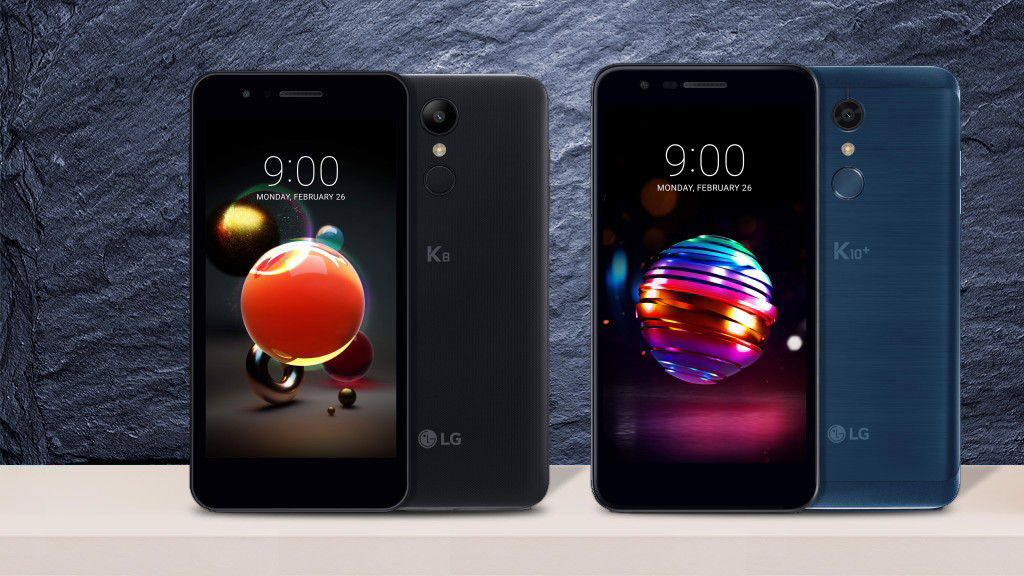
LG just announced two new smartphones LG K8 2018 and K10 2018 announced just before the Mobile World Congress. Both the phone feature better cameras and HD display. These new phones are the successor of K8 (2017) and K10 (2017) that were launched at CES in January last year.
LG has confirmed that both the phones will carry over its glossy pebble identity. The smartphones have 2.5D Arc Glass build and color options including Aurora Black, Moroccan Blue, and Terra Gold.
LG K8 2018 comes with 5-inch HD (720×1280 pixels) On-Cell display with 294ppi pixel density. It has 1.3GHz quad-core SoC with 2 GB RAM. The phone has 8 megapixels rear camera with LED flash and 5 megapixels front camera. The camera also features Auto Shot, Gesture Shot, Flash for Selfie, and Quick Share features. It packs 2500 mAh battery.
LG K10 2018 comes with 5.3-inch HD In-Cell display. It has 1.5GHz octa-core SoC. There are three variants of this phone.
These are K10 (2018), the K10+ (2018), and K10 Alpha (2018). K10+ (2018) comes with 3GB LPDDR3 RAM with 32GB (eMMC) storage while the K10 (2018) and K10 Alpha (2018) come with 2GB LPDDR3 RAM with 16GB (eMMC) storage.
All three models come with 8 megapixels rear camera. The K10 and K10+ get 5 megapixels wide-angle front camera while the K10 Alpha has 5 megapixels front camera (No wide-angle). All three models pack 3000 mAh battery.
These phones will be rolled out globally in key regions such as Europe, Asia, Latin America and the Middle East. These phones will also be showcased at LG’s booth in Hall 3 of Fira Gran Via during MWC.

ASUS Zenfone 5 Lite with 6-inch FHD+ display, dual front and rear cameras announced

Image result for ASUS Zenfone 5 Lite
Along with Zenfone 5Z and Zenfone 5, Asus has also announced Zenfone 5 Lite at MWC 2018. ASUS Zenfone 5 Lite offers the dual camera at both front and the back.
ASUS Zenfone 5 Lite features a 5-inch Full HD+ 18:9 2.5D curved glass display with glove touch support. It runs on Android 7.0 (Nougat) with Zen UI 4.0 and will also receive Android 8.0 (Oreo) with Zen UI 5.0 later.
The phone has been announced with two Soc models. One with 2.2 GHz Octa-Core Snapdragon 630 14nm processor with Adreno 508 GPU and second with 1.5GHz Octa-Core Qualcomm Snapdragon 430 with Adreno 505 GPU. Both models will also be available in 3GB and 4GB RAM variants having 32GB and 64GB storage respectively.
The phone has a dual camera at the back with 16 megapixels primary sensor having the f/2.2 aperture, 3-axis EIS, secondary 120-degree wide-angle camera and a secondary camera (unknown sensor). The front side also has dual camera having 20 megapixels primary sensor with soft LED flash, f/2.0 aperture, Sony IMX376 sensor, 3-axis EIS, secondary 120-degree wide-angle camera and a secondary sensor. For both dual camera setup, we have yet to know the details of secondary sensor.
The phone comes with 4G VoLTE, WiFi 802.11 ac (2.4GHz + 5GHz) (SD630) / WiFi 802.11 b/g/n (SD430), Bluetooth 4.1, GPS and NFC. It also packs 3300 MAh battery.
The SD639 variant will cost higher than the SD 430 variant. The company has yet to announce the price. It will be available Midnight Black, Rouge Red and Moonlight White colors. The roll out will start from March.

Samsung Galaxy S9's Intelligent Scan Tech Is Faster but Not More Secure: Researcher

Samsung Galaxy S9's Intelligent Scan Tech Is Faster but Not More Secure: Researcher

HIGHLIGHTS

  • Intelligent Scan uses both face recognition and iris scanning
  • Samsung's face recognition, iris scanning have been fooled in the past
  • Researcher says the method can be fooled as easily
Samsung introduced a new system for face unlock with the Galaxy S9 and Galaxy S9+, called Intelligent Scan. The system combines both face recognition and iris scanning to provide a 'smarter' solution than either of these two methods in isolation. If face recognition doesn't work, the system then proceeds to scan irises. If both fail, the system uses a combination of the two to unlock the smartphone. However, researchers now claim that while the Intelligent Scan system is faster than previous implementations by Samsung, it is not more secure than any of them.
According to a report by CNET, Samsung still uses the same 2D face scanning method it had introduced with the Galaxy S8 last year, and the same iris scanning tech it had introduced with the Galaxy Note 7. The combined result of Intelligent Scan tech is a faster, smarter system, however, it isn't more secure. The tech still can't be used to authenticate payments on Samsung Pay, for example, and the face recognition tech seen on the Galaxy S8 had been fooled using a photo of the user's face in the past, while the iris scanning tech was fooled by a similar method.
The report cites Jan Krissler, a security researcher with the hacking group Computer Chaos Club that had broken the Galaxy S8's iris scanning tech, to say there was no point trying to hack the new system Samsung had introduced with the Galaxy S9, as it was just a new release of the same system.
However, while Samsung doesn't let users authenticate Samsung Pay payments via Intelligent Scan, it lets users utilize the tech to log into websites with an app called Samsung Pass. It, however, relies on the iris scanner, or the combination of both the iris scanner and face recognition, but not just face recognition. It is clear Samsung is playing catch-up with Apple and its Face ID tech introduced in the iPhone X.
"This is an area where Samsung is clearly behind Apple," the CNET report quotes Global Data analyst Avi Greengart as saying. "Apple invested an enormous amount of money, time and effort into Face ID. Even though Samsung had a version of Face ID first, they're playing catch-up," Greengart adds.

Xiaomi teases Mi Mix 2s with Snapdragon 845 in new video

صورة ذات صلة

Earlier today, Xiaomi teased the newest addition to its bezel-less flagship series, the Xiaomi Mi Mix 2S, in a video it released on MiaoPai, a Chinese streaming platform.


It doesn't feature much in the way of engrossing content, outside of confirming the presence of the latest Snapdragon 845 SoC in the device through hand signs. While no other internals is confirmed, the rumor mill suggests that the Mix 2S will sport a 6" OLED screen in the newer 18:9 aspect ratio, along with a whopping 8GB RAM and 256GB of onboard storage.
Some sources also say that it may feature a fingerprint sensor under the screen much like Vivo's recently announced handset, though again, this isn't officially confirmed.
Source: Xiaomi via GSMarena

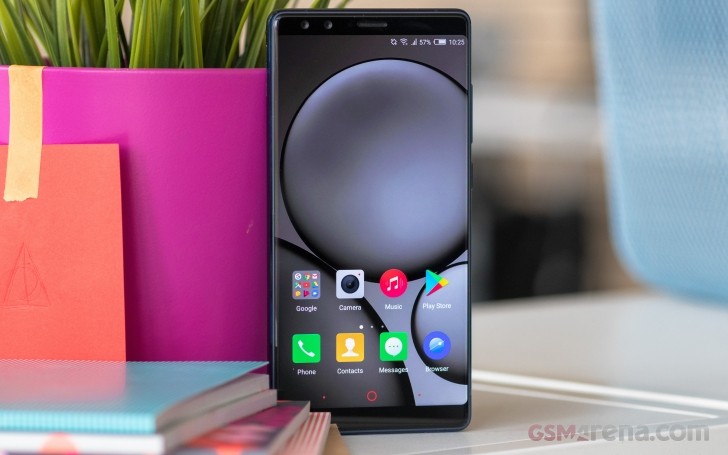
Future ZTE nubia phones will have stock Android

MWC 2018 was a place where all the major companies had something to say or unveil, including ZTE. The manufacturer’s smartphone brand nubia will drop the Nubia UI and will switch to stock Android for its global devices. The primary reason is users wanting faster Android updates and patches.
Future ZTE nubia phones will have stock Android
According to Greek sources, nubia will keep its unique user interface only for its homeland China where it will also lack Google services.
Future nubia phones coming with stock Android Oreo will be on Project Treble, meaning their updates will finally arrive on time.
A nubia executive said it will be easier for Nubia to maintain such software in global models because it would also keep consumers in Europe and other regions happy.
Lately, nubia has been launching devices in Europe under a different name. Last time we reviewed a ZTE nubia phone, it was branded as Archos Diamond Omega.
Source (in Greek)

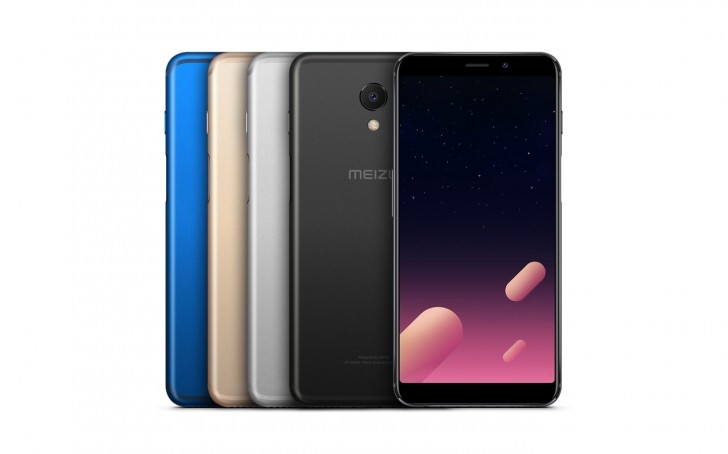
Meizu to launch M6s with 4 GB and 6 GB RAM

In the first weeks of the new year, Meizu introduced the long-awaited M6s. The phone came with a fingerprint scanner on the side, a software home button called Super mBack and unique Exynos 7872 chipset. The midranger was announced with 3 GB RAM and 32 or 64 GB storage, but according to a new TENAA listing, Meizu will relaunch the phone in new versions with 4 GB and 6 GB RAM.
Meizu to launch M6s with 4 GB and 6 GB RAM
The upgraded Meizu M6s will keep all the other specs the same - a single 16 MP camera with f/2.0 lens on the back and an 8 MP sensor on the front, a 5.7" display with tall ratio and HD+ resolution and a 3,000 mAh battery. The power cell is charged through a micro USB, but at least there is 18W fast charging.
Pricing is yet to be announced, but sources suggest it will start from CNY1,399 ($220/€180) for the 4 GB variant. For comparison, the 3 GB + 64 GB option costs CNY1,199 ($186/€152), while the cheaper version with 32 GB is just CNY999 ($155/€126).
Source (in Chinese) | Via

Comments system

Disqus Shortname

Comments System

Disqus Shortname

Disqus Shortname

theme-daddy

Comments System

[blogger][disqus][facebook]
Powered by Blogger.